-
Most Recent Topics
-
-
Latest Comments
-
By Kevin von Duuglas-Ittu · Posted
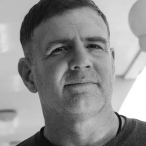
Saenchai with another KO win on Entertainment Thai Fight. He's the last magical fighter of Thailand, that last of Thailand's greatness, and we are all blessed as he continues in the ring. I don't watch it much (or any of Thai Fight), but still consider it a blessing. When he stops it will all be gone, even though this is kind of half-fighting, and surely he'll do show fights after his retirement. What I love about this photo - and the first thing is that it suddenly feels like Saenchai has aged, and this happens - but what I love about this photo is that you can see his "coal eyes", which is what I call them. There was an old trainer at Lanna named Nok, who when you trained with him his eyes, if you got any advantage or edge, would just turn black. You could see, he just went into that state. And you knew, stop fucking around. Saenchai has always had such a joyful, playful visage, and a charm of handsomeness that he carried everywhere, even into intense battles. But every great, experienced fighter, even Saenchai, has "coal eyes" inside of him, they have to or they couldn't do it the way that they have. And, in my poetic view, it feels like in this slightly aged photo you can see his coal eyes come out. And its really beautiful. -
By Kevin von Duuglas-Ittu · Posted
I thing that many people miss in assessing ONE's future, or even capacity to do anything, is that almost everything you know about ONE (aside from financial declartive documents, and the few voices that escape NDAs and non-disparagement agreements), has been told to you by ONE. So every concept of "reach" or success that is measurable or on a scale comes from the ONE picture building. And...its a bit like asking Trump how his Casinos and buildings are doing. A good, if small, example of this is how RWS is far exceeding ONE Thailand in revenue, by a factor of about 6. source It just shows a very different concept of business. RWS actually wants to generate revenue at the gate, ONE much rather would pack houses with loads of given away tickets and project massive success through its social media agreements and message control. ONE is trying to generate (one might even say "fake") the feeling of a massive moment...because everything is basically a commercial for the next investor round. They much less want actual fans, so much as the vast impression of fans, and spending everything they can to create the impression is a priority...because the "real" revenue" is a massive investment round, unfortunately something that seems to be drying up. They aren't selling the sport to fans, they are selling it to investors. Sizzle, not steak. So any kind of picture we draw from is already part of this enormous Image creation, which it was hoped would bootstrap itself through dramatic gestures of largess. Flaunting huge payment numbers, etc. A form of "Mystery"... Which isn't to say that none of this is good. The world, and especially the "good" of Capitalism, is made from ostentatious pretension. There is in the world the whole "escape velocity" theory, the fake it until you make it, and when fueled by more than half a billion dollars there is a lot one can fake, in fact the faking becomes quite real, affects real lives, turns into power, creating new capacities and opportunities. So, one of the most compelling questions about what comes now is that the actual question of revenue and profit making, peeled away from the presentation of profit-making, gets put up against other forms of Thailand Muay Thai that are pulling revenue. And, because so much of what has come to us has come through the filter of ONE's image making its very hard to know where anything is at all. Everything is bigger, better, about to break through. It's the Golden Rule of Trump-like positive image driving, which when looking at the world does lead to power itself. Invest now! Buy now! You don't want to miss out on this once in a lifetime opportunity! A certain kind of power. We of course should not be lead astray into thinking that Thailand's Muay Thai does not develop and express itself through all kinds of power relations, many of them institutional, many strongly divided by class differences and entrenched hierarchies, There is no "innocent" Muay Thai in the sense of a Muay Thai without efforts of domination and control, in fact the art and sport arguably is the ritualized performance of such. It's more though that maybe this form of economic magical portrayal, as it is so globalized, so hyperstated, so flowing from that which is outside and beyond Thailand, feels like it could be destructive. Too much sizzle...too little steak? -
By Kevin von Duuglas-Ittu · Posted
This is my wild guess about the possible future of ONE with the rumored loss of both big investors and Amazon Prime: My take...I suspect it will morph into a significantly contracted phase that is something the Thai gov will support as part of its Soft Power commitments which will somewhat balance out the loss of big investors. There may even be rule changes to bend a bit closer to trad elements (maybe glove changes? maybe a touch more clinch?); guessing there will be a significant downgrade of top end pay and bonus rates, and probably significant cuts into the all-important marketing budget too. It will fall more in line with Entertainment offerings like Thai Fight and RWS. The challenge is the struggle over the shrinking Thai talent pool, which is also no longer producing transcendent talents like Superlek and Nong-O, and how it will compete against other Entertainment promotions without big top end pay and bonuses (I believe RWS revenues were reported as much as 6x ONE's in Thailand). It may have difficulty continuing to snipe the high level names produced by other promotions. It still has a well-built-out, massive digital media footprint in a very small info ecosystem and that proven strategy, and has secured a place in the Thai combat sport imagination, two very big assets.
-
-
The Latest From Open Topics Forum
-
 Hi all, Does anyone know of any suppliers for blanks (Plain items to design and print a logo on) that are a good quality? Or put me in the right direction? thanks all
 -
 The first fight between Poot Lorlek and Posai Sittiboonlert was recently uploaded to youtube. Posai is one of the earliest great Muay Khao fighters and influential to Dieselnoi, but there's very little footage of him. Poot is one of the GOATs and one of Posai's best wins, it's really cool to see how Posai's style looked against another elite fighter.
 -

By FuckedElbow-Muay · Posted
Yeah, this is certainly possible. Thanks! I just like the idea of a training camp pre-fight because of focus and getting more "locked in".. Do you know of any high level gyms in europe you would recommend? -
 You could just pick a high-level gym in a European city, just live and train there for however long you want (a month?). Lots of gyms have morning and evening classes.
 -
By FuckedElbow-Muay · Posted
Hi, i have a general question concerning Muay-Thai training camps, are there any serious ones in Europe at all? I know there are some for kickboxing in the Netherlands, but that's not interesting to me or what i aim for. I have found some regarding Muay-Thai in google searches, but what iv'e found seem to be only "retreats" with Muay-Thai on a level compareable to fitness-boxing, yoga or mindfullness.. So what i look for, but can't seem to find anywhere, are camps similar to those in Thailand. Grueling, high-intensity workouts with trainers who have actually fought and don't just do this as a hobby/fitness regime. A place where you can actually grow, improve technique and build strength and gas-tank with high intensity, not a vacation... No hate whatsoever to those who do fitness-boxing and attend retreats like these, i just find it VERY ODD that there ain't any training camps like those in Thailand out there, or perhaps i haven't looked good enough?.. Appericiate all responses, thank you!
-
-
Forum Statistics
-
Total Topics1.4k
-
Total Posts11.5k
-

Recommended Posts
Create an account or sign in to comment
You need to be a member in order to leave a comment
Create an account
Sign up for a new account in our community. It's easy!
Register a new accountSign in
Already have an account? Sign in here.
Sign In Now