Jump to content

A writer's journal - Muay Thai, My Wife and Thailand


Recommended Posts

10/5

Okay, a great week of just pushing through the pads with Pi Nu. It’s so strange to be doing this physically when I’ve been watching it first hand, so closely, for 5 years+. I’m really adept at physically imagining movement, so in a certain sense I feel that I’ve been “doing” Muay Thai for all these years…all the movements are so familiar to me. But it also feels like I’m in rehab after a spinal injury, and my body parts aren’t doing what I know they are supposed to do. It’s like a virtual knowledge trying to map on physical capability.

First Realization: This is something I think I knew, but today it hit me like a ton of bricks. Like I suddenly really knew it. Pi Nu is just an amazing padholder. It struck me today just how much he is teaching rhythm, really his own little style of a kind of music. Techniques are like notes, and yes, you need to play them right, but what is really important is how you play them together. Certain notes belong together, and there are common melodies that can be played within any particular natural group. And yes, the tempo can be changed to produce expressions, and qualities of experience, but it’s the rhythm that holds it all together. And he teaches this rhythm over and over and over, pulling knees and elbows into percussive beats, teeps to jabs, checks to kickbacks, uppercuts to hooks, and back. And he runs you through this music, over the fatigue, until you just start to hum it…you can’t help but hum it. That’s why he was so puzzled when an enthused westerner once asked him: What is your favorite combo? It’s not like that. It would be like asking what are you favorite musical bars? Yes, it’s something that might be answerable, but it isn’t the right level of description. It’s not the level of music.

And, as I climbed out of the ring this morning, armed with my new and weighty realization, I realized another thing. Sylvie often gets the question: How do you not get confused when legends all train you different, sometimes conflicting techniques? She usually answers this by saying she just takes the things she needs or feels attracted to, and leaves the rest. But what struck me was how Pi Nu’s music, which is a certain basic structure of Muay music, is sympathetic to for instance Karuhat’s music, which at surface value is quite different, more lyrical, more sudden. But they kind of harmonize together. It struck me how all of these legends, men who feel Muay Thai in their bones because they have warred it out at Lumpinee and Rajadamnern with huge pressures in the Golden Age, each have a music. And they are all different. What Sylvie has been doing is a kind of DJ-ing these musics into a style she is finding herself, ultimately toward her own music. So creatively, strains of one might sample into another, one harmony might morph into another, beats may syncopate across others. Yes, some music may be jarring to mesh with another, but not really. Not if you really feel the qualities of each. All music can be joined to other music, given the right transition and context. And this just blows my mind.

Second Realization: This came earlier in the week. I was truly struggling with my front leg teep. Being substantially over-weight didn’t help one bit. Being fairly immobile for this half-decade certainly was no boon to my balance. But somehow I was just all wrong about. Nothing made sense. Come on Kev, what are you doing? You know what a teep looks like. But then an interesting thing happened. After several more very confused teeps Pi Nu demonstrated how it should be done. I don’t have to explain how beautiful his was. But, what is interesting is that he didn’t pull the teep. He made it jab right into me. And then again. I’ve seen him do this to Sylvie. Not pull the teep. He doesn’t rocket it, but he makes sure that it has a pointed sting. Now she’s only 105 lbs so she regularly is knocked back, and I’ve noticed that she kind of has gotten into the habit of becoming really passive to this slight bit of aggression, like: If I just melt and fall away…submit…maybe he’ll stop. And he usually doesn’t. I’ve got more than 150 lbs on Sylvie so I decide to take the teep (my gloves were a makeshift pad), in fact after two, I’m going to lean into it, crowd the space. I’m basically not going to be teeped off, at least not effectively. And this changed the whole lesson. Pi Nu felt my resistance, so when he then called for me to try, once again, he resisted. He leaned into it. Suddenly I was banging my foot into his pad, trying to move him. I was no longer teeping “to the pad”. I was actively trying to use my weight against him. And given my size I sent him flying a few times. It’s enough to say Pi Nu was really happy. It wasn’t just that I was able to move him. It was suddenly I was using much better technique. I wasn’t a complete spaz about it. Such a big deal. It made me realize that “copying” or “imitating” a technique really can send you down the wrong alley. You might very well get to a very nice approximation, but if you aren’t using the technique to do what the technique is for, first and foremost, you are kind of wasting your time. Since this moment of realization I’ve had mixed results. Isn’t that the way that it is. Your epiphany is never as clear as when you first have it, but it fuels me, and my teep is definitely working towards a fun and meaningful technique. Now I try to pop him back, let my weight do the talking, and let Pi Nu do his magic and complicate the task with context.

Third Realization: There are two basic footwork patterns in Muay Thai. Not to oversimplify it, but there are two. In one weight goes to the opposite side foot when striking. In the other weight goes to the same side foot when striking. I had gotten into a bad habit during my few months of hitting the bag at Lanna (I didn’t really take an instruction then), years ago. I got pulled into the Dempsey jab which involves a deep “falling step” sending your weight forward onto the lead leg. This set up a basic weight transfer for me, same side weight transfer on all hands, and it kind of got into me somehow and hibernated all these years. This is the exact opposite of the weight transfer Chatchai Sasakul taught Sylvie. I don’t want to go too far into this with examples, but I can feel that these form two different kinds of “walking”. So, in shadowing elbows in a really informal, light way I started experimenting with walking with the opposite side weight transfer. It took me a couple of days before I really started to feel the way that this kind of transfer creates a twisting, elephant-walk-like, basic rhythm. I also realized that it’s really important not to blur these two kinds of walking, at least when distinguishing them in your body. It’s the reason why in the classic right cross you are told to nail your back foot to the ground. You don’t want to slur them. Yes, there are moments when you want to walk with same-side weight, but this holds it’s own purity. It counts as a counter measure. Of course there are many way to blend footworks, but this, at a basic level, felt like a profound element. So, I’ve been working to make sure my weight transfer is opposite, slowly growing to that rhythm. Today I realized how this kind of weight transfer can have a big effect on elbows, allowing them to be married to the basic “cutting off” gallop of a fighter like Yodkhunpon. Each gallop holds it’s own elbow at the ready. Side to side one can move, taking elbows off the typically linear, right in front of you elbow striking practice that is common. It opens angles.

Fourth Realization: This is also something I kinda knew, but as with all these things experiencing it really made a difference. Contrary to some fears of those who have not yet been to Thailand to train: It doesn’t matter how good you are to be taken seriously. No honestly. Yes, a lot of things do matter, and yes, this applies to what I might call “true teachers” of Muay Thai, but you can be the worst example of an athlete – look at me, vastly overweight, in his 50s, almost no training experience – and you can still be pretty interesting to a “true teacher”. The reason for this is found in Sylvie’s 2 part article on Beetle Fighting. In the Muay Thai world there is just an elemental – I’m tempted to call it pure – love of the battle, of the clash. In beetle fights it doesn’t matter how good or bad your beetle is, or how likely he is to not be good, the whole game is to find someone who might be a good match…and to have a battle. At any level. There are champion beetles that may be worth thousands of dollars (I’m assuming), and there are beetles you just find on trees. All of them battle, or can battle. If you find one that doesn’t really like the fight, won’t engage, no problem, he probably isn’t made for the clash. I think, after watching Muay Thai for these 5 years, this is a fundamental grounding ethic of Muay Thai.

There is another part to this though. True Teachers are a bit like Real Mechanics. Real Mechanics are fascinated by any kind of mechanism. How to make it work better? You see this with car guys. Guys have the car up on blocks trying to make it better. It can be a rare model, or it can be a Pinto, its the same ethic. What can I turn this Pinto into? Teachers like Pi Nu are exactly like this. All their students are like projects. They are thinking: Hmmm, what can I turn this into? Yes, the main business and pre-occupation is building Thai boys into stadium fighters and even champions, but deeper, below all of that, there’s a deeper morality. Everyone can be improved. What can I make this fighter into? Humble beginnings don’t really matter much at all. In fact, in some ways it’s more interesting. Pi Nu took Angie, a trans Thai woman with zero Muay Thai experience in her 30s and through matching effort and focus help turn her into the first trans-woman to fight at Lumpinee. Not because that was any kind of aim of his, but because he looked at her and said: What can I improve? I say all this because I can see in his eyes that he’s thinking the same thing when he’s holding pads for me (and really probably anyone). I have no intention of fighting, but already he’s thinking of possible opponents for me, starting to joke about them. When my teep sent him flying he thought: Hmmm, we can do something with that. When he felt how I kind of love knees and elbows together he thinks: Hmmm, we can do something with that. For these kinds of pure teachers everyone is like a stock car whose engine he wants to work on, and that he’d like to maybe race. Not on some amazing, famous track, but on the neighborhood drag strip against another car around it’s same capacities. See what this can become. Of course not every kru is like this, and some gyms have real bottom lines or business aims, but I’ve seen this in several krus in different camps and it’s a beautiful thing.

  • Like 1
Link to comment
Share on other sites

  • 4 months later...

2/26

Arg. Long time not writing about my love of training and Muay Thai. Smh. This has been the problem. I'm a consistency guy. I like to do the same thing, the same way, over and over and over. Same time. Same situation or mental framework. I can power through almost anything this way. But...Muay Thai isn't really set up like that for me. There are lots of interruptions of schedule. When Sylvie fights we travel for days at a time. Sometimes when she's in an off mood I stay away from the gym. And sometimes it's just events that come up. Sylvie got sick. Sylvie's family came and visited. 100 things. I'd call them excuses, but really they are something else for me. Reminders that as yet Muay Thai is not a commitment for me. Not a full, hardcore commitment that I want it to be. I want to be 100% uninterrupted, and it hasn't been happening, at all. That's on me, but it's also a part of just how I'm wading into to this. I'm trying to get to the place where I can just dive in and not come up for a year or two. That's my Happy Place. That being said, after several months of serious interruptions, I've come back to regular training with Pi Nu, and am absolutely loving it. He's just a crazy good instructor, always pulling me forward to higher tolerances. More rhythm. More beauty. More forcefulness. And yes, better condition.

Speaking of conditioning, something that really overshadowed my Muay Thai was a deeper realization. A more fucked up realization. If I stay at this weight I'm going to die. There are very, very few old fat people. Certainly not old people my size. The arrow really hit home when we went to the hospital to get my eyes checked. I had been experiencing some blurred vision that I feared might be degeneration of some kind, or possibly something related to pre-diabetes. Turns out my eyes are fucking healthy, as far as the examination went, but the nurse's eyes bugged out when she took my blood pressure. It was way, WAY up. Something like 160/110 maybe? Took a lot of Googling to figure out just how bad that is, but it looks like my sedentary life of just doing digital work, and nothing else, and eating a storm of salt and sugars, has absolutely wrecked my body. Or is fast on the pace of wrecking my body. This is serious stuff. I'm not going to be around to see Sylvie do her incredible things if I'm not going to be around. We set an appointment to see a doctor about it in Pattaya, I got prescribed high blood pressure medicine, and long story short I got full-on serious about my weight and my health. Big Time. First thing I did was take control of my diet. Salt out. Sugar out. Potassium in. But, the biggest thing I did - and please, no health or diet advice, I've Googled the hell out of this and I've made my decision - is that I've returned to the one thing that got me to successfully lose weight previously in my life when I got a little big (not this big at all, but still big). I've started to alternate day fast, and honestly I love it. It changes my relationship to food which is really what needed to happen. Fasting does all kinds of wonderful things to mice and such, and you can read up on it all yourself, but this is something I believe in. And that, more than anything, is what this is about. I feel much, much better, know that I'm heading in the right direction, and I just hope that I haven't done too much damage in the last 4 years of living in a very unhealthy way. I'm due to go to the doctor next week for blood work, and probably a re-up on the hypertension medication, but what this is really about is that you have to realize what is precious and what it takes to keep it in your life. And Sylvie is precious. Not having a life pretty much ends all questions of value.

So, my return to consistent Muay Thai (it's going to be interrupted again next week by travel, but that's ok) is much more to be seen in the context of my alternate day fasting, and my transformation of my diet. My body is definitely changing, and I suspect that I should be in the healthy zone of weight in about 8 months. Here's to hoping that my insides improve as much as my appearance.

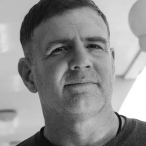
Below is a photo from today at 113.5 kg (250 lbs), starting many months ago at 126 kg (278 lbs). It's not all come off from Muay Thai, but it is definitely pitching in.

20180226_104451.jpg


About the Muay Thai itself, it's just insanely satisfying. I clinched for the very first time in my life with a giant of a person (no really, much bigger than me which was cool) and got my neck wrenched big time - about 5 days of pretty terrific neck pain - but I was proud of myself trying all sorts of defensive maneuvers in my very first clinch. It was honestly the only thing I could do as he was just so big I couldn't even lock on him, and very strong. But face smush with walk forward, a little drag back, a shoulder roll to break the hand position. Small things, but so cool to be able to try and do them.

A few things I loved discovering in pad work with Pi Nu. I was kicking ok, but I found that when I started adopting the Pinsinchai Reach (the way Pinsinchai fighters extend their arm defensively instead of swinging it back) that my power, relaxation and accuracy went up. I didn't expect that at all. I really like that reach and am going to keep up with it because it dovetails perfectly with the cross reach on knees (cross-grabbing the shoulder cap of the pad holder, using your own shoulder to defend and shield). They are the same basic motion, and it feels like they could mask each other. There also seem like there can be other things thrown off this reach. Elbows, feints. I also have been having huge problems with my lead teep. Pi Nu really likes to call a lot of this, and is adamant that it to be done, both defensively and offensively. I just can't get my leg up and have all the parts and pieces come together. It feels out of body uncoordinated. But, I tried the Pinsinchai reach on the teep (you aren't really supposed to do this) and it improved my teep pretty quickly. So I'm just going to play around with that. Extending the arm could intimate a jab or just be a high distraction. It seems like fun. I'm not there yet, but I inched forward.

I also get in the ring with Sylvie and let her beat me around the space, so she can work on just staying close against a big figure, and so I can, well, get beat on. It feels really good to see the rhythms right there in front of me, and to feel the results of impact. Like it might feel good to feel the water splash in your eyes if you were trying to become a swimmer. If I ever fight - who knows - this kind of beat around and catching of strikes (I just wear my gloves) is putting the Muay Thai right in me. And again, it feels good.

That's all for now. For any that are following this drivel of an account, good things happening. Next week is a travel week, but maybe I'll do some shadow boxing every day, or something more to get the Muay Thai bug biting.

  • Like 5
Link to comment
Share on other sites

Create an account or sign in to comment

You need to be a member in order to leave a comment

Create an account

Sign up for a new account in our community. It's easy!

Register a new account

Sign in

Already have an account? Sign in here.

Sign In Now

  • Most Recent Topics

  • Latest Comments

    • Really enjoyed this title fight between Jaroensook and Captainteam, a classic stand off between Muay Khao and Muay Femeu. Jaroensook is out of the Boon Lanna gym in Chiang Mai and Hill Tribe (and ethnic minority in the North) which has had some modest success in Muay Thai, and Captainteam is Kru Thailand's son, and one of the more femeu specialists in the sport now. I didn't really know Jaroensak so the first round mislead me. He looked really comfortable leading with hands and I thought he was going to be a Muay Maat fighter (Boon Lanna has had a few aggressive Muay Maat fighters), but in the second round he went straight into Muay Khao persistence hunting, never rushing, just getting positive entry positions (better than in the first round) and starting to foil TeamCaptain's excellent throw-game. I'm pretty much always going to subconsciously watch for Muay Khao vs the femeu specialist, so nothing against TeamCaptain (love Kru Thailand!), it was just great to see that classic match up and the dynamics of yore. Also the finish - which looked borderline foul-ish, but clean enough - came out of nowhere in a way that is exactly how Muay Khao style works. You just start slowly degrading the ruup of the femeu fighter, not really winning the point fighting game, not even looking like you are having an effect yet, but then suddenly a door opens, the ruup is broken and open just for a moment and your "doh" (your continuous rhythms) just take the opening almost unconsciously.    It's also kind of cool to see Jaroensak achieve some clinch position success with a variety of Long Clinch, a style of clinch somewhat perfected by Tanadet Tor Pran.49. Below is a film study I edited together of his approach: This is an article we put out on Tanadet's Long Clinch style with video and screenshots.  Jaroensak doesn't lay out quite like Tanadet, and doesn't have full, wide manipulative base, but several times he got very strong positions in the clinch passing into Long Clinch dynamics for a few beats. Tanadet is Hill Tribe and from Chiang Mai, so I wonder if there was some influence or cross-over? He used to additionally train at the original Lanna Muay Thai, the gym Boon's gym has grown out of. You can find Tanadet's Muay Thai Library sessions here where he teaches the Long Clinch technique and style: #56 Tanadet Tor. Pran49 - Mastering Long Clinch (63 min) watch it here This is one of the most interesting and, if mastered, dominant clinch positions one can use, and the entire session is devoted to it. I filmed with young Long Clinch master Tanadet, and discover all the small refinements he created that turned what for many fighters is just a transitional position, into an entire system of attack. This is a rare session, capturing a little known and used clinch system.
    • There can be no doubt that Thailand's culture is a hybriding culture, a synthesizing culture that has grown from the root weaving diversity from influences around the world, reaching well back to when the Ayuthaya Kingdom was the commercial hub for the entire mercantile region, major influences stretching in trade all the way to China and all the way to Europe, if not further, while - and this is important - still maintaining its own Siamese (then Thai) character, a character that was both in great sympathy towards these integrative powers, but also in tension or contest with them. This being said, I think there is a rather profound misunderstanding of the nature of Thailand's traditional Muay Thai and the meaning and value of its underpinnings in the culture, when seen from the West, and this is the (at times) assumed majority of thinking of fighting as "labor", and the rewards or marking of that labor as some kind of "wage". This is often the conceptual starting place from which Westerners think about the value and possible injustices of Thailand's Muay Thai, often boiled down to the question: Is the fighter getting a "fair wage"?  I do think there are strong and important wage oriented justice scales that can be applied, but mostly these are best done in the contemporary circumstances of Thailand's new commodification of Muay Thai itself...that is to say, to turn traditional commitments and performances INTO labor, that is to say, to capitalize it. It is then that the question of labor and wage holds the best ground. But, the question of wage or payment fairness really is doing another operation, often without intent, which is by reframing traditional Muay Thai in terms of labor and wage, along with the strong normative, Capitalist sense that such labor should exist freely in a labor market of some kind, one is already deforming traditional Muay Thai itself, and in a certain sense perhaps...adding to its colonization, or at least its transmutation into a globalized, commodified humanity, something I would suggest the core values of traditional Muay Thai (values that actually draw so many Western adventure-tourists to its homeland), stand in anchored opposition to. To be sure, Capitalism is deeply interwoven into the fabric of Thai culture, and has been for much of the 20th century, but this weave is perhaps best understood terms of how Siam/Thailand's traditional Muay Thai is of the threads of greatest resistance to Capitalism itself (along with its atomizing, individualizing, labor/wage concept of human beings). When we think of the values that not only motivate fighters, but also structure and give meaning to their fighting, at least across the board of the Muay Thai subculture, we really are not in the realm of individualizied workers who sell their labor within a labor market. (This mischaracterization is perhaps most egregious when discussing Child and Youth fighting from a Western perspective, where it is very commonly repictured as "child labor" (ignoring the degree to which such terminology completely recasts the entire question of the meaning and value of fighting itself, within Thai culture). We are instead within a realm of traditional pre-Capitalist values (which themselves have morphed with tension with Capitalizing forces), a world of craft (not "work"), composed of strong social hierarchies that are in constant agonism with each other, where fighting is probably best understood as struggle over Symbolic Capital (with some modification to Bourdieu's concept). The traditional Muay Thai world is primarily not a world of labor and wage - anymore than, to use an even more traditional example, novice monks should be considered to be doing "labor" in wats and monestariess, for the (some would regard as false) "wage" of spiritual merit. Instead, the meaning and value of such commitments and performances are embedded within the traditional frame itself (a frame which can be examined or challenged for ethical failures, to be sure), and to extract them from that embedded value system and its attendant, inculcating motivations, is to subvert the very nature of Thailand's traditional Muay Thai.  It doesn't mean that Thai Muay Thai fighters don't fight "for" money, or that money's paid or won do not matter, in fact in a gambling-driven sport - gambling driven at its very first roots, both in terms of history and in terms of apprenticeship - money amounted indeed matter a great deal. It's just that the labor / wage framework is a significantly inadequate, and in fact destructively transformative in its inaccuracy (even when well-motivated).  This conceptual misunderstanding from the West is even made more complicated in that today's traditional Muay Thai is fast adapting to new "labor" style economic pressures, in the sense that fighters are increasingly working more - in a hybrid sense - in the tourism economy, both in gyms were they have to train and partner Westerners, and in the ring where they have to fight in a transformed way in Entertainment tourism vs Western tourists (tourist who may be viewed as both customers purchasing Thai services and also as discounted laborers), all with the economic view that the Western visitor holds a certain degree of economic priority. Traditional Thais are pressed now in towards becoming something more like laborers, while still maintaining many if not most of the customary motivations and the embedded values of Muay Thai, kaimuay subculture, leaving analysis perhaps best to a case by case basis.     
    • Welcome to the dark side. Honestly, the "blue belt" equivalent in Muay Thai is when you stop flinching during sparring and actually land a clean teep.  If you're training 2-3 times a week, you'll probably reach that "competent" level in about 18 months. Striking is weird because a lucky punch from an untrained giant can still suck, but by then you'll have the footwork to make them look silly.
  • The Latest From Open Topics Forum

  • Forum Statistics

    • Total Topics
      1.4k
    • Total Posts
      11.6k
×
×
  • Create New...