All Activity
- Past hour
-
 For more philosophical thoughts on rhythm (and possibly the failure of rhythm), especially as it relates to "Style", this thread discusses Karuhat, perhaps the most accomplished Muay Thai stylist: a section from the above: Thais learn much more foundational techniques - with far greater variance, and much less "correction" - principally organized around being at ease, tamachat, natural. The techne (τέχνη), the mechanics, that ground stylistics, are quite basic, and are only developmentally deployed in the service of style (& signature), as it serves to perform dominance in fights. The advanced, expressive nature of Thai technique is already woven into the time and tempo of stylistics. This is one reason why the Muay Thai Library project involves hour long, unedited training documentation, so that the style itself is made evident - something that can even have roots in a fighter's personality and disposition. These techne are already within a poiesis (ποίησις), a making, a becoming. Key to unlocking these basic forms is the priority of balance and ease (not biomechanical imitations of the delivery of forces), because balance and ease allow their creative use in stylistics.
 -
This film study also delves into the potentials of Chatcchai's rhythm dynamics, and how they can be experimentally trained with other Muay Bouk styles: The fuller discussions of the film is found here, public and free on Sylvie's Patreon.
-
 Clyde Wade joined the community
 -
Above is two minutes of work with Sylvie and Chatchai this week. He's teaching her his tiny inner gallop step which triggers on-beat much of his boxing strikes. He is explaining that this tiny step is the same as in Muay Thai, especially when throwing lead side weapons. Chatchai is a world class Boxing Kru but he was also a Golden Age Muay Thai fighter, and he sees Western boxing and Muay Thai not in conflict, but rather as built out of comparable rhythms. What is interesting about this is how that small gallop is in the same beat as say the gallop step Yodkhupon shows (just below), in his Muay Khao stalking. It's the iambic pentameter, one might say, on a much smaller scale, close space scale. Once we get below the level of strikes - strikes being a primary preoccupation of Western appropriations and inclusions of Muay Thai "techniques" - we get into a much more important dimension of fighting. Fighting in many ways a battle over space, fighting the fight where you are more comfortable and where your opponent is not (a primary reason why Muay Femeu vs Muay Khao battles are classic), but the battle over space is conducted often through the battle of rhythms. Each fighter is attempting to (somewhat musically) impose their rhythm on the fight, and disrupt the rhythm of the opponent. This is especially important if each fighter has a different rhythm, it becomes a musical duel, but even with similar rhythms you still are trying to get inside the opponent's "beat". This is part of the meaning behind the Muay Thai sway or rock, that has become iconic. It's the beginning of a rhythmic battle, in which a baseline is laid for variance to ensue. But, what is beautiful about the top video, at least in my mind, is how that it secretly connects up to Yodkhupon's space-eating gallop, which allows you to quickly cross over distance and suddenly and suffocatingly be on your opponent. What Chatchai's inner gallop does is allow the gallop to become at any time a trigger for a strike, out of the same rhythm, once you get into the phone booth of the pocket. You don't change rhythms, you just condense it. Seven years ago Sylvie put together this video on the Yodkhupon gallop, and how it relates to the Muay Thai sway. You can even see in it her showing Chatchai's weight transfer rhythm (which he had taught her). But, she had not yet learned Chatchai's inner gallop step, nor seen how Chatchai's rhythm could connect up with Yodkhunpon's gallop...and Yodkhunpon's gallop had not yet been connected up with Chatchais's full Boxing vocabulary arsenal.
- Yesterday
-
Chatchai tells us that he's changed up and started relying less on pad holding in his developing of boxers. Too much padholding been a mistake. The best work is done on the bag. Less mitts, more bag. This while the "combo" has been the primary colonization and extraction of Muay Thai, spreading like wildfire in Thailand, virtualizing the sport away from its embodiment and creativity. (Hell, just ran into this "virtual" padholding.)
- Last week
-
 Kudo Atsutane joined the community
 -
 Mikami Bairei joined the community
 -
I think one of the most salient points about the widening commodification of Muay Thai is that a thing is how it is made...and "how it is made" will produce wildly inferior fighters. Fighters themselves will be shaped by commodifying forces aimed at very different performances, much of it to churn out dreck content, and build an Image of Fighting that is quite perverse to the fighting that has been. New production lines are being made, organized around tourism labor.
-
It's still mind boggling to me that you change all the rules so less skilled Western fighters can win fights...and then everyone says: Why are Thais so unskilled??? lol. Did you not see the move, the magic trick? They took hard to reach, prestigious titles, or invented new ones, and then transformed them into something to include non-Thais, by changing the sport. It is true that Thais are much less skilled than they used to be, but they downregulated all the superior skills that they still had. Let's just remove all the things Westerners (and others) aren't good at to make our sport popular. Painful to watch, and almost humorous. But, this is the commodification of things. Importantly...things.
-
The basis of an argument of why Farang one day may be banned from fighting at the National Stadia, the clawing back on the commodification of the National sport, as a National competition treasure. As the argument goes in the book I've been citing (this is a separate article), the West has come to divide the world into "persons" and "things". Persons are very different than things, things are suitable for commodification. But, this is a Western division. The thesis above is that forces of economy work to commodity everything, which is to say, to make everything exchangable with anything else. This is fundamentally in tension with, or even at war with "culture", which ideally works to cordon off exchange, to limit it, and even at an asymptotic limit make nothing exchangeable with anything else. The fixity of strata and social regimes, local exchanges is what generates cultural meaning. Commodification works to erase cultural meaning.

- Earlier
-
 Davirs joined the community
 -
 YuumaTamafune joined the community
 -
 Kagiyama Iki joined the community
 -
Thank you for doing this. It's great to have Sylvie's magazine scans upload and the outline details you found.
-
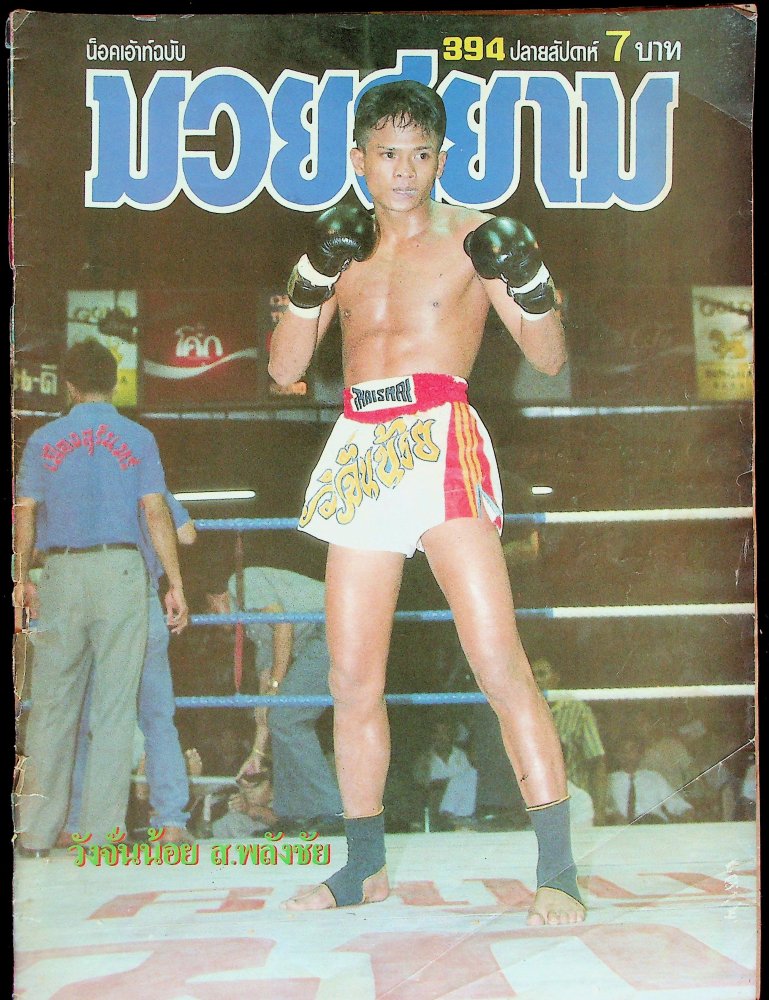
 Summary focusing on important or interesting details Cover: Photo of Wangchannoi after his win over Dokmaipa on Nov. 20th. Page 2: Photos of a fight between two lesser known fighters. Page 3: Photo and details of Panomrunglek’s stoppage win over Namphon on Nov. 20th Pimaranlek (Somrak) and Panomrung were friends but were set to face on Nov. 30th. Continued on Page 25. Chanalert was set to face Sangtiennoi in December at 127 pounds after his win over Manasak by points. Continued on Page 25. Mention of about event in London on Nov. 18th which featured Green vs Sombat. Incident in which a fighter was assaulted by a trainer after being disqualified. Continued on page 25. Page 4: More details regarding the fighter who was assaulted by a trainer. Chainoi was set to move up on November 28th to 112 lbs to face Duangsompong who had recently defeated Kompayak. Page 5: Yodpetch was scheduled to fight Kuekrit for a third time on Nov. 23rd for Petchyindee. Their first fight was a draw and their second a win for Yodpetch. Santos pulled out his first scheduled bout with Boonam but was later scheduled to face him on Dec. 10th. Page 6: Isaara was set to defend his Lumpinee Stadium Lightweight title against Dekkers on Nov. 27th. Continued on page 26. Photo and details of Orono’s points win over Panphet on Nov. 20th at Lumpinee Stadium. Photo and details of Wangchannoi’s points win over Dokmaipa on Nov. 20th at Lumpinee Stadium. Photo and details of Oley’s points win over Detduang on Nov. 20th at Lumpinee Stadium. Photo and details of Jaroensap’a points win over Lansguan on Nov. 20th at Lumpinee Stadium. Jaroenthong was set to rematch Therdkiat on Nov. 27th after beating him the first time. He hoped to face Cherry and Dekkers after while fans hoped for Samart vs Dekkers. Continued on page 26. Information about Singdam as he was a rising star. Continued on page 26. Details regarding the boxing match between Espinoza and Thanomsak on Nov. 29th. Continued on page 26. The Onesongchai card on Nov. 27th was set to have Smit vs Changpuek and Isaara vs Dekkers. Continued on page 26. Page 7: Quotes from Lorlek, trainer of Rajasak, before his pupil’s match against Nuengsiam. Continued on page 13. Info about Oley. Continued on page 17. 45th Rajadamnern Anniversary card on Dec. 10th. Continued on page 13. Chuwatana, the Rajadamnern Stadium Fkyweight champion and ranked #6 by the IBF, was set to face Espinoza on Dec. 10th. Continued on page 13. Gilbert wanted to fight Samaisuk on Dec. 10th. Continued on page 25. Page 8: Somdet fought Chuchai on Nov. 23rd and then was scheduled to fight Daotrang in Pattaya on Nov. 29th. Continued on page 25. Chitalada set to defend against Chang on Nov. 24th in Seoul. Continued on page 17. WBC ordered Holyfield to defend his title against Tyson while the WBA and IBF sanctioned him to fight Foreman. The head of the Por.Pongsawang gym had been trying to break into boxing. Continued on page 17. Page 9: Photo and details of Orono’s points win over Panphet on Nov. 20th at Lumpinee Stadium. Photo and details of Oley’s points win over Detduang on Nov. 20th at Lumpinee Stadium. Photo and details of Jaroensap’a points win over Lansguan on Nov. 20th at Lumpinee Stadium. The head of the Nongkeepahuyuth camp planned a ritual due to Namkabuan losing by knockout in the first round to Samranthong and Wangchannoi while Namphon lost by knockout in the first round at Rajadamnern Stadium against Kongnapa and then by TKO in the fourth round against Panomrunglek on Nov. 20th. Continued on page 25. Petchdam’s coach challenged anyone at 126 lbs after he beat Koratnoi and then knocked out Chumpuang with a head kick in the third round at Lumpinee Stadium on Nov. 16th. Continued on page 25. Langsuan’s trainer complained about fight results. Continued on page 25. Details about Wichannoi’s protege. Continued on page 25. Page 10: Various reader questions. It was the opinion of the writer that Taweesaklek and Rajasak were in the running for FOTY with Kaensak not far behind. Page 11: Various reader questions. Writer reported the WBC was looking to add a Muay Thai branch. Location of Muangsurin camp given. Photo and details of Oley’s points win over Detduang on Nov. 20th at Lumpinee Stadium. Results of Onesongchai event on November 20th. Hippy vs Khanuphet, Nongnarong vs Singsamphan II, Namphon vs Panomrunglek, Orono vs Panphet, Langsuan vs Jaroensap, and Oley vs Detduang. Continued on page 25. Page 12: Biography and interview of Kongsiam, a lesser-known fighter. Page 13: Kaensak was set to face Taweesaklek on Nov. 27th at Rajadamnern Stadium to help determine the FOTY for 1990 but Taweesaklek fell ill and it was delayed. Continued from page 7. Fight card for Dec. 10th included Ballentine vs Samaisuk and Hippolyte vs Mongkhondet. Page 14: Story about a Muay Siam writer at the ICU. Page 15: Random story. Continued on page 24. Page 16: Details regarding Holyfield’s win over Douglas and what’s next for him. Page 17: More details about Holyfield’s upcoming fight with Foreman as well as the result of Benn vs Eubank. Continuation of page 7 & 8. Oley was hoping to fight Taweesaklek. Fight card details from Nov. 20th including that Hippy was KO’d in R1 by a right elbow. Page 18: Multiple upcoming matches with Thai boxers mentioned. A Onesongchai event was set for Nov. 27th Another mention of the incident in which a fighter was assaulted by a trainer after being disqualified. Page 19: Photo and details of Noree before his match against Espinoza. Photo and details of the rematch between Cherry and Superlek at Lumpinee Stadium for Onesongchai on Nov. 27th Namphon had been in a serious car accident before his return fight against Panomrunglek. He needed 10 stitches because of the cut caused by an elbow. Wangchannoi wanted to stop being called the “Chivas Kid” as he claimed to have changed his lifestyle. A Nov. 28th event, specifically “วันมวยไทย“, was set with Taweechai vs Phedetsuk and Samson vs Chettha. Page 20: Information for multiple events. Page 21: Information for multiple events. Complaint of camps lying about their fighter’s record to get them easier opponents. Page 22: Information for multiple events. Page 23: Information for multiple events. Northern Thailand Muay Thai rankings. Page 24: Muay Thai event results. Story from page 15 continued. Page 25: Stories continued from pages 3, 7, 8, 9, and 11. Page 26: Writer states that Rajadamnern is decreasing in popularity compared to Lumpinee. Stories continued from pages 6, 9, 32, and 33. Rotnarong lost a decision to Jaechen. Page 27: Past fight results and event predictions. Too many details to list out. Page 28: Past fight results and event predictions. Too many details to list out. Page 29: Past fight results and event predictions. Too many details to list out. Page 30: Past fight results. Continued on page 24. Too many details to list out. Page 31: Interview with the “Swordsman of Seven Graveyards” who was working as a reporter. Page 32: Pothai was suspended after being dismissed by the referee during his rematch with Jomhod on Channel 7 but was free to fight after Dec. 12th. Continued on page 26. Past fight results. Thanooin looked to avenge his points loss to Ritthichai but was stopped in the second round by a cut caused by an elbow. Page 33: The scheduled semi-final fights for the Isuzu Tournament were Robert vs and Yodkhunpon vs Chartchainoi. Continued on page 26. Mongkoldet was set to rematch Hippolyte on Dec. 12th after losing to him previously in Holland. Continued on page 26. Complaints and comparisons about betting and scoring at Lumpinee, Rajadamnern, and Samrong. Page 34: More complaints about betting and scoring. Continued on page 26. Info on lesser known fighters. Continued on page 26. Page 35: Photos of a fight between two lesser known fighters. Page 36: Photo of Tukatathong Por.Pongsawang with his Lumpinee title.
 -
 Private Girls From Your City - No Selfie - Anonymous Cacual Dating https://Cupidon.Top [url=https://Cupidon.Top] Private Girls From Your Town [/url] - Anonymous Casual Dating - No Selfie NEW GIRLS [url=https://Cupidon.Top/girl/chloe-ziva-49.html]Chloe Ziva[/url] [url=https://Cupidon.Top/girl/lola-la-fleur-11.html]Lola La Fleur[/url] [url=https://Cupidon.Top/girl/suki-82.html]Suki[/url] [url=https://Cupidon.Top/girl/hillary-is-wet-13.html]Hillary is WET[/url] [url=https://Cupidon.Top/girl/bamby-belle-104.html]Bamby Belle[/url] [url=https://Cupidon.Top/girl/luminatria-29.html]Luminatria[/url] [url=https://Cupidon.Top/girl/anna-cute-fox-114.html]Anna Cute fox[/url]
 -
The full hi-res PDF download: Muay Siam: Nov. 30 - Dec. 3, 1990
-
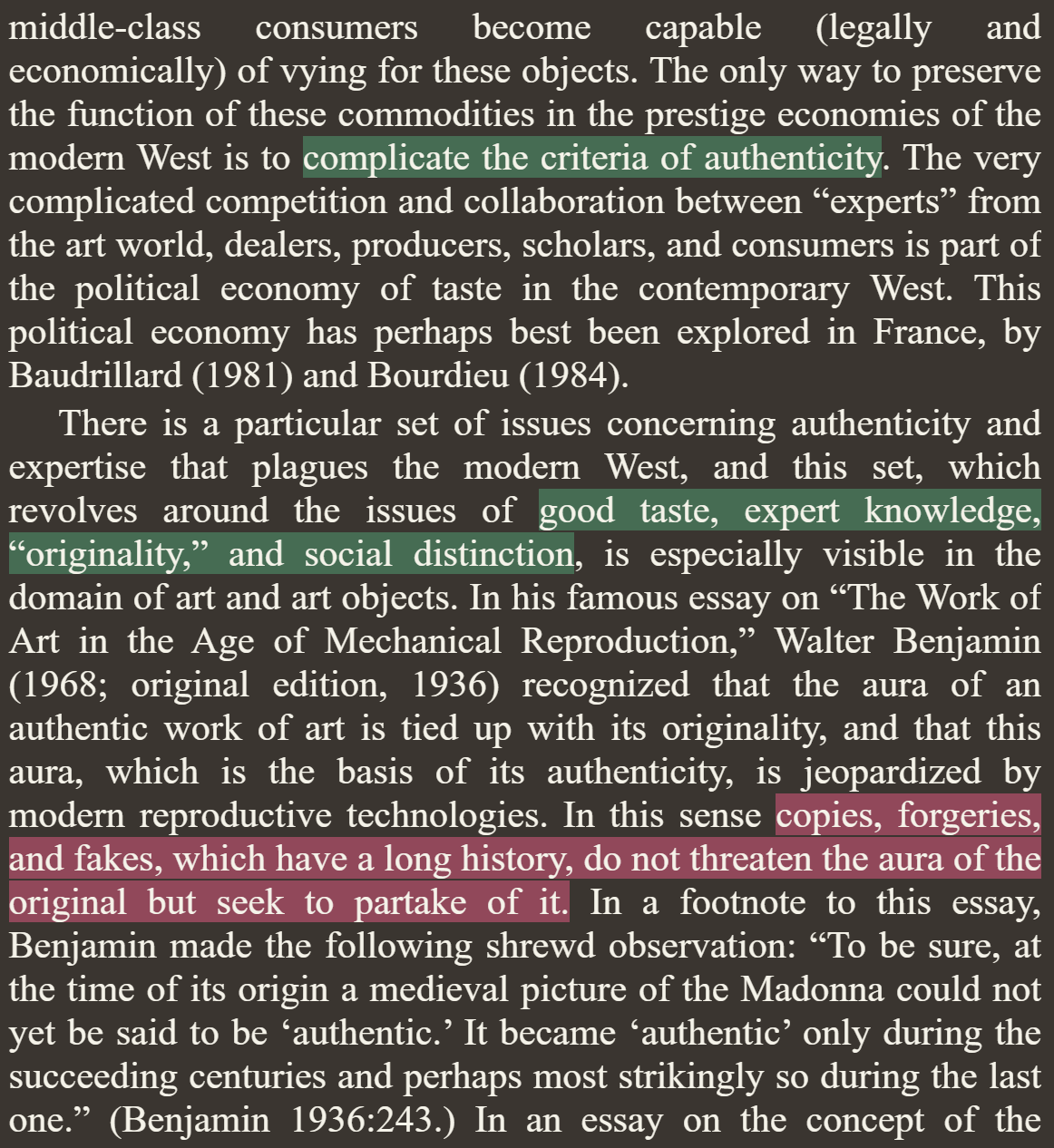
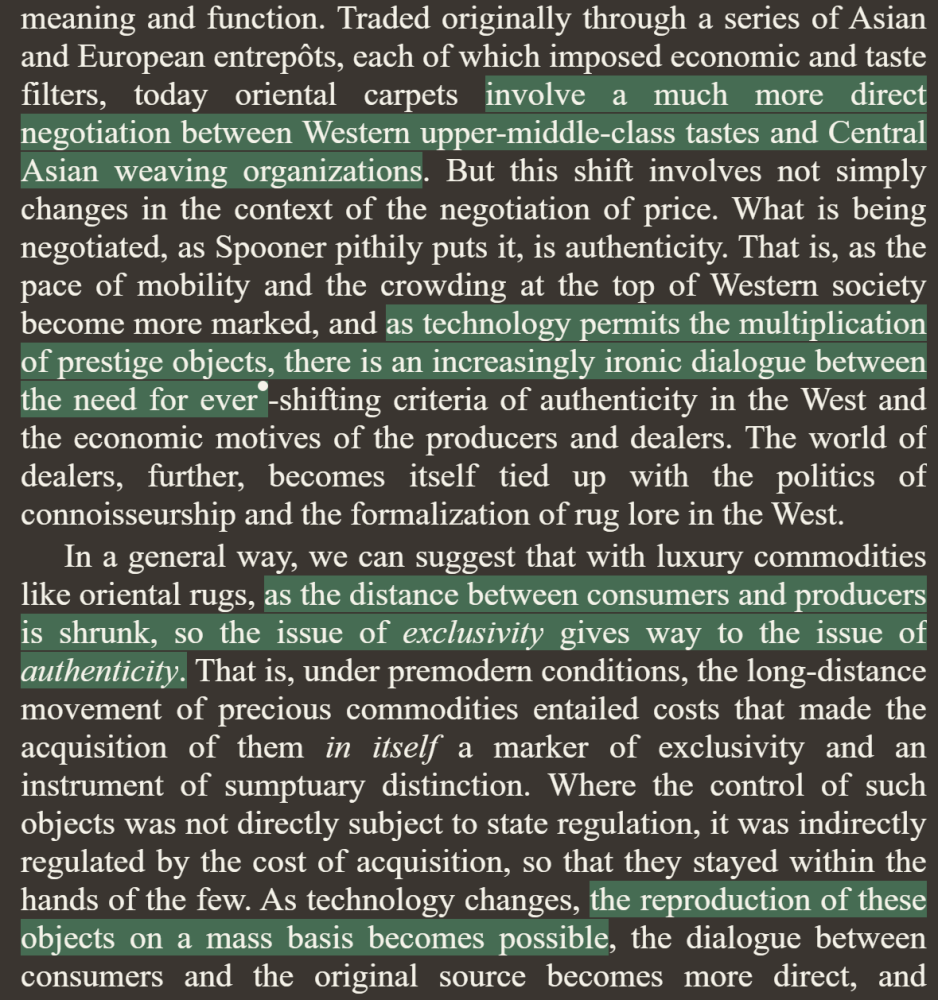
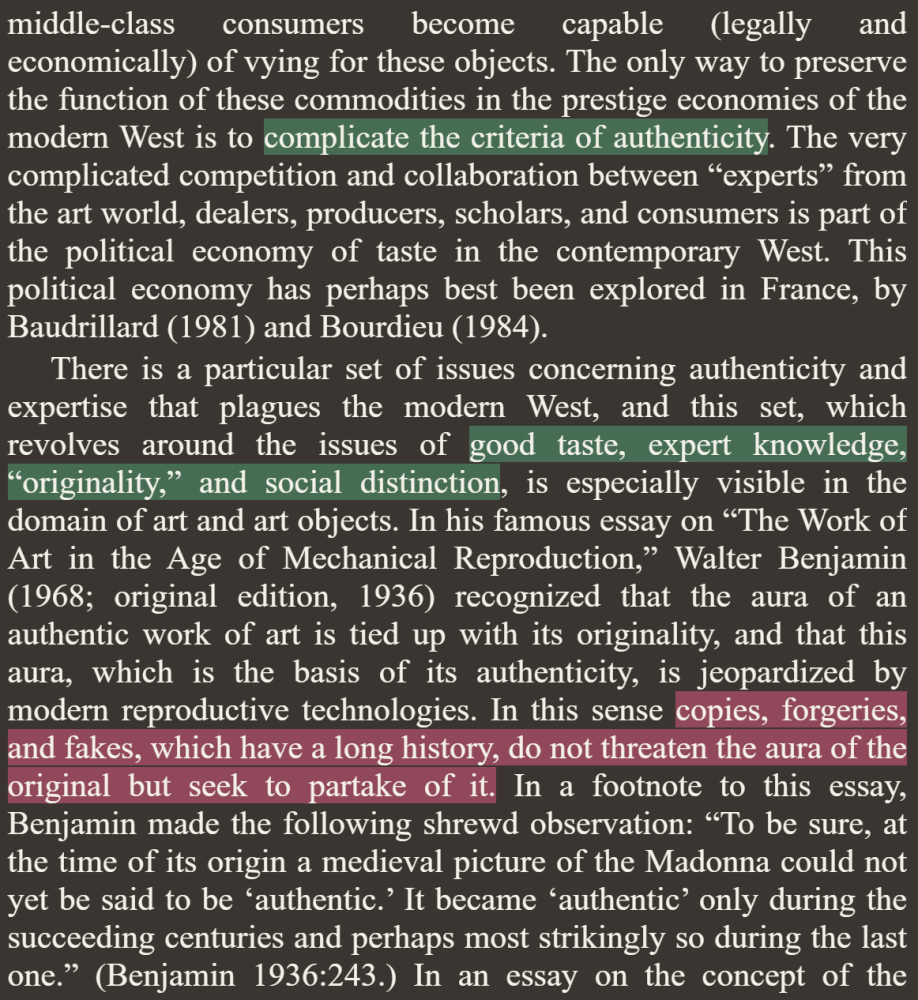
from the same commodity article I've been citing, here a very important transition from exclusivity to authenticity, as the distance between (knowledge) production and (knowledge) consumption shrinks, and duplication or imitation increases. This genuinely is where we are with the invasion of the "combo" from the West, really a technique "duplication" mechanism, attempting to copy and reproduce for export the more nuanced knowledge of traditional Muay Thai production. Notable is that, as rule changes have come to emphasize the de-skilled combo (clash fighting, KO bonuses, aggression and volume valorization, down-regulating defense and control), the counterfeit becomes woven into production itself...and, one suspects that "authenticity" will rise as a value marker, due to this collapse.
-
I've been thinking about how to write about this. A few sketched out ideas. Sylvie's chosen path to fight a LOT - and as it turns out more than anyone documented along several criteria, but it wasn't really the ambition - was because when we came to Thailand we were pretty surprised by a few things. The first was that really there wasn't a huge gap between very experienced local circuit Thai female fighters, and nominal "World Champions". It was more a small question of degree, which meant that if you were a high practicing circuit fighter you already were not that far off from "World Champion" level. At the time - and maybe this has changed some, in part due to Sylvie's example, now fighters count and even probably exaggerate their fight totals - the goal was for foreigners to come to Thailand and win belts. As there was no substantive difference between belt and no-belt, and as Sylvie's actually goal was to just get increasingly proficient in Muay Thai, to come closer to it in its cultural form, pursuing belts really wasn't very interesting, especially because being booked for a belt fight at the time was largely in the hands of a few powerful gyms that were promoting their name to Westerners. She didn't really want to fight in the high profile Tourism layer of Muay Thai, the layer that was big gym steered. Instead it seemed that the best way forward was to just fight. And fight a ton. The Thai gambling social form of Muay Thai, and other cultural constraints, made it so that Sylvie would never really be given an easy match, once she became known, and as she increased the size of her opponents - a luxury she had because she was only a 100 lb fighter, and she could practically go up and up and up as long as her skill kept pace - there was a huge talent pool of Thai female fighters in the traditional Muay Thai scenes. She began detaching herself from gym control (extremely hard to do), in part because gyms have social obligations to specific promoters, and in part because gyms also have incentive to force matchups that (at times) unduly favor their Western fighter, and booking her fights in various regions of Thailand, moving from provincial fighting, to local tourist oriented scenes, to Bangkok big broadcast shows, from the North to the Northeast to the South. It really was profound, and uniquely freed fighting because all that mattered was that the fight was fair and challenging, the exact recipe for unique growth (a sign of this babybear match-making is that she really held a 70% or so win rate as her opponents went up in weight. It really was an ideal Milo's Calf condition), building-in increasing handicaps, one that I don't believe can ever be duplicated because of how much Thailand's Muay Thai has been infiltrated by the Soft Power economic imperative, digital image-making, and how female fighters themselves have come to be reinscribed in the Thai power dynamics of Entertainment Fighting. Promotions and gyms now value and control Western (and Thai) female fighters in much more restrictive ways that produce a limitation of opportunity and experience. Restrictions indeed existed before, but today female fighters have been woven into other more hierarchical interests that are unlikely to recede. It really was that she didn't want to be fighting for belts that were politically arranged (even if great opportunities), or to have people controlling her matchups to produce regular advantages so to secure an image of dominance. Images of dominance in Thailand's Muay Thai actually often close down opportunities, and it was our feeling that as traditional Muay Thai itself is undergoing widespread deskilling, the one sure fire way to continue to grow was to fight, climbing an increasingly steep grade. The fight, if the thumb is not unnaturally on the scale in your favor, is the one (fairly) unblemished experience that grew knowledge and capacity in the sport. Thais fought a lot in their development, Sylvie would just take this principle and maximize it as an adult who came to the sport later in life, detouring the various prestige honey-pots and power imbalances that could trap you, cut you off from what was possible in you. Key was working at Thailand's talent-rich margins, and creating a vast network of promoter and gym relationships so that you never became too advantaged in the ring...advantage that came as bias to all Westerners who have been part of Thailand's embrace. Sylvie was setting a path on the edges of the sport, a sport which had a quite vast provincial base, much of which Westerners did not really encounter. The result of all this, of literally 100s of fights of increasing size difficulty, in the traditional - nuanced - mode of the sport is an extremely grounded - she hasn't been knocked down in over 1,000 rounds - defensively robust (a gep awut 4th round imperative) fighting style, that is very, very attuned to narrative scoring (it has to be, because that's how trad scoring works), all built around Muay Khao and clinch dominance in a very small, 100 lb body, quite in contrast with the more common body types and size around which Muay Khao usually is ascribed. An absolutely unique fighting capacity, that was made out of its fight path...along with the continuous influence of really unparalleled documentary work, which also has been no small part of the story. But it really came from shunning advantage, and false pictures of mastery. It came from just doing. And it came from a certain kind of invisibleness, the ability to slide across power barriers that can capture many others, at a different time in Thailand's Muay Thai history, a time of a perfect relationship between connectivity and tradition, in a sweet spot that no longer exists, before Muay Thai was given over to the foreigner in more programmatic, economic, sport-changing ways.
-
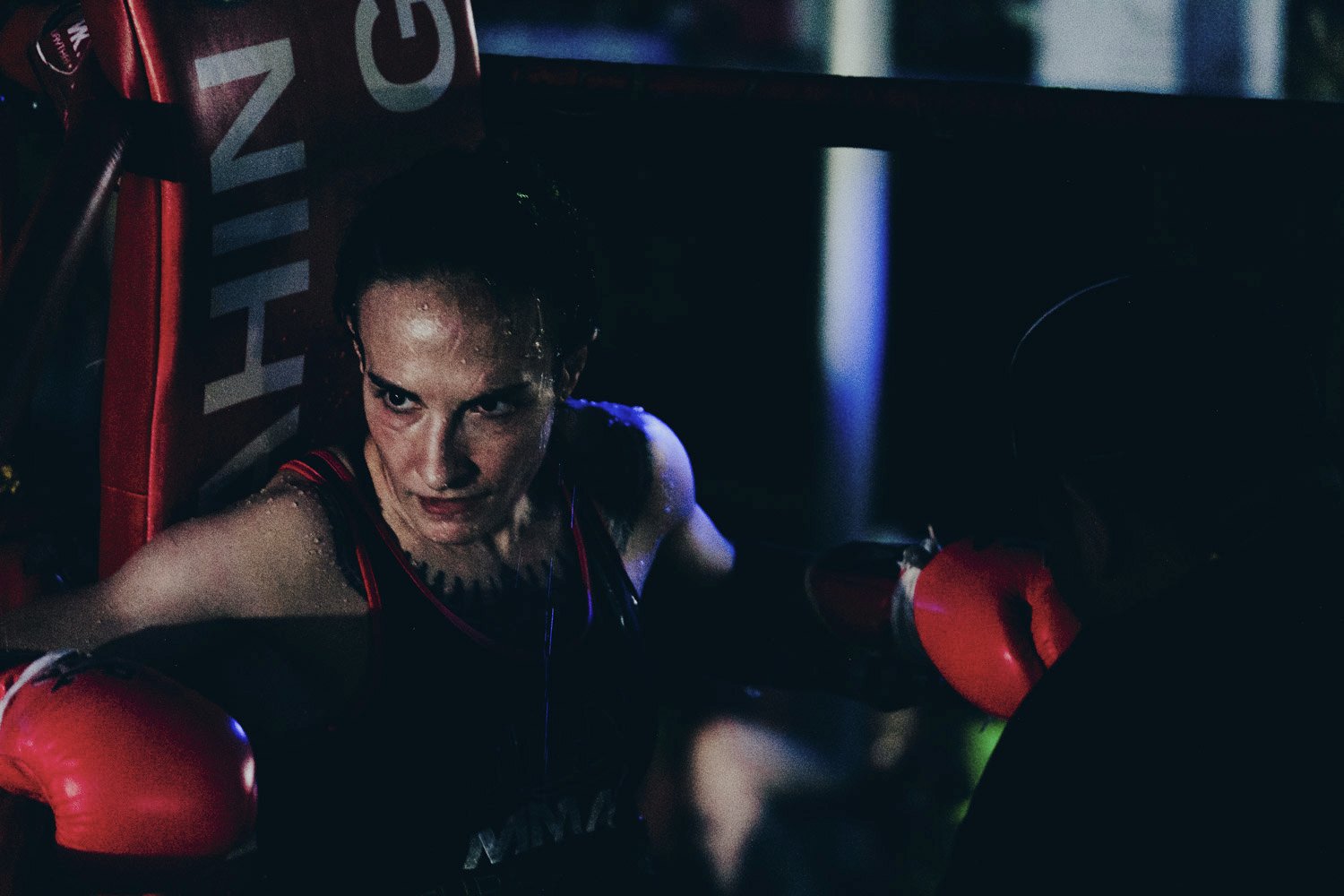
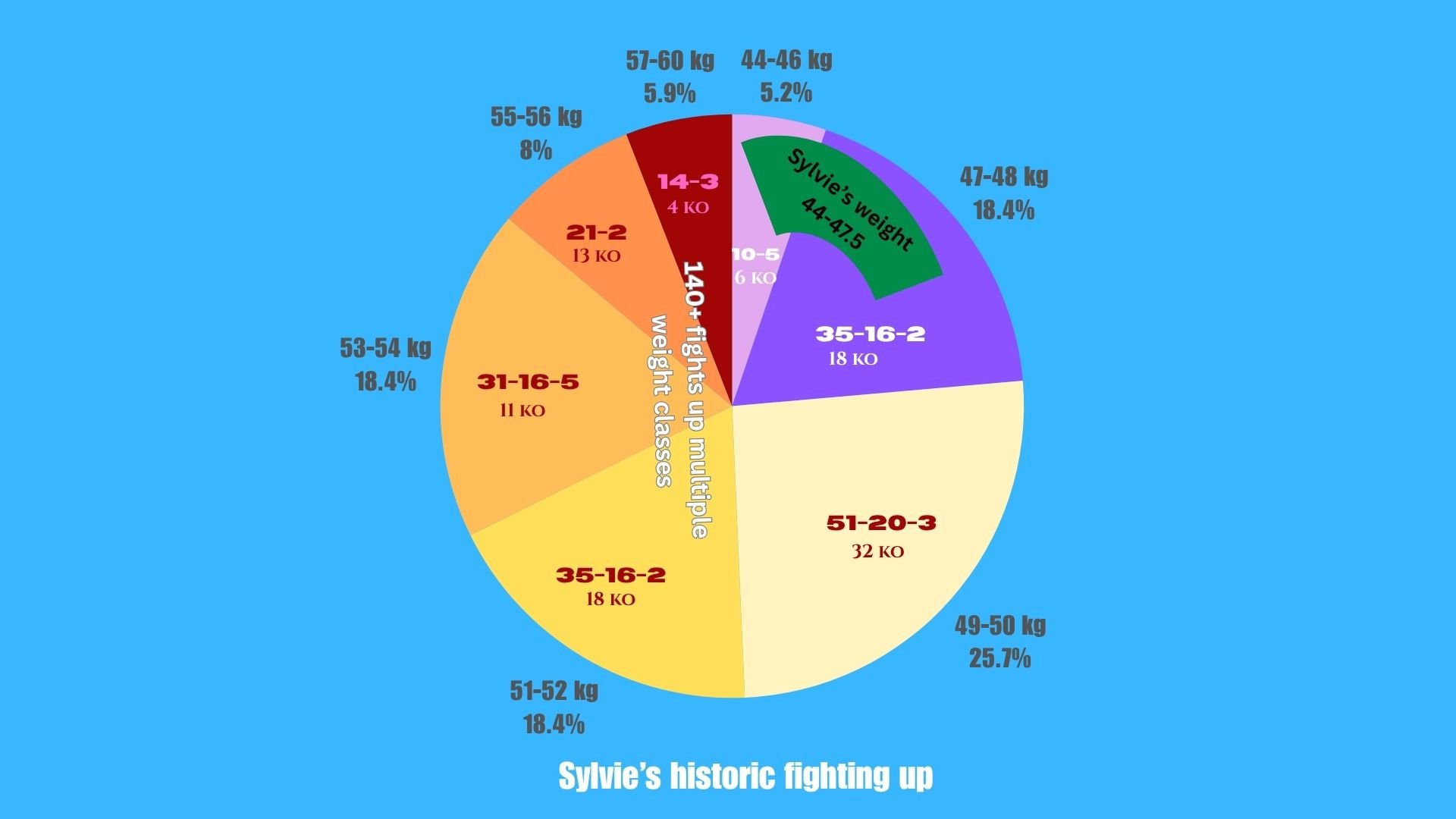
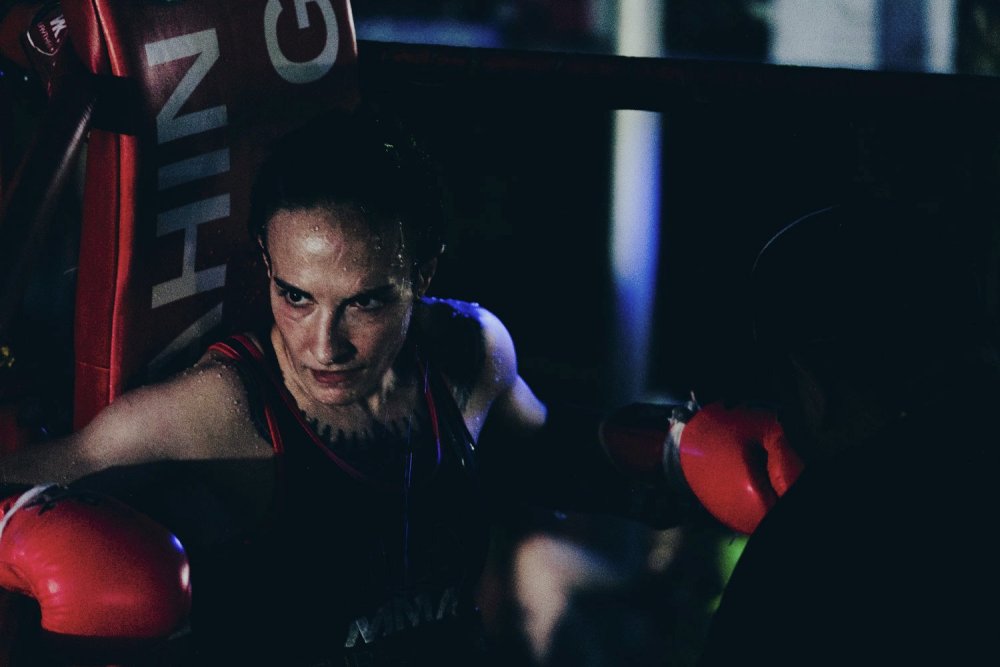
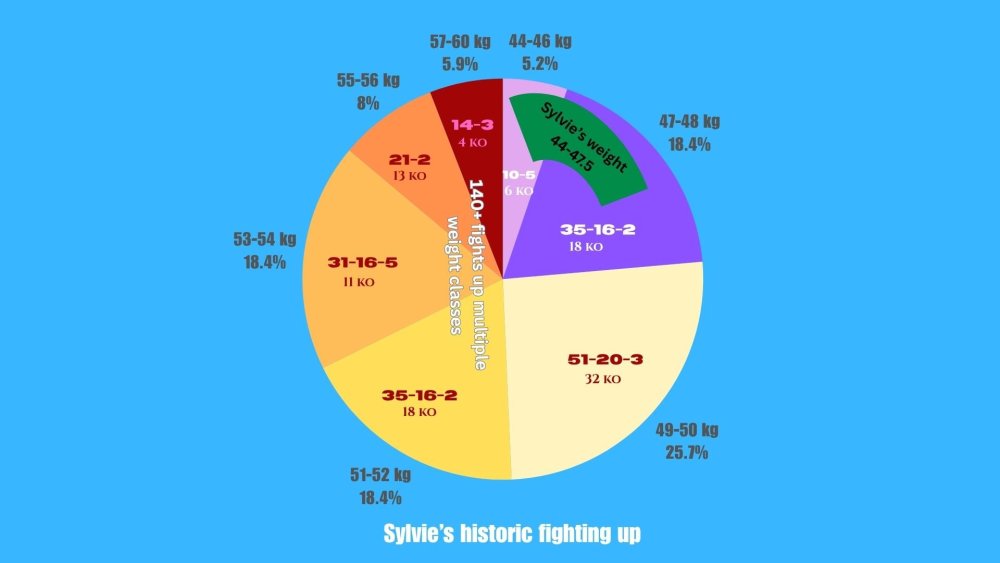
Fighting is just such an incredibly compressive experience. Even one fight, or five. As Sylvie's husband it just boggles my mind that she has fought nearly 300 documented fights, even at the human level, stepping into the ring that many times, in a sport and culture she was not raised in, was not acclimated to in her youth, but rather came to love and grow into, earning her physical and emotional compassry, day by day, year by year. Just the sheer numbers of that compression spins my mind. Over and over and over. Stepping into conflict fire to learn the art of shaping under duress. This week Sylvie had one of her more typical matchups. Refusing to fight in tourism's Entertainment Muay Thai, especially since COVID, she's positioned herself at the margins of where the Internet light usually shines, in provincial festival fights and in local city scenes where traditional Muay Thai is still trained for and fought. And giving up substantive weight so matchups that test her, grow her, can be had. This time it was in Hua Hin vs Linping who is a 53-54 kg fighter who often faces significantly bigger Westerners. She's tested herself. But Sylvie is giving up 6-7 kgs going in. Not all that unusual for her, in fact about half her fights have been 3 or more weight classes up. What I'm writing about here is something much more simple, something more elemental. Sylvie - by far - has fought up more than any female fighter in documented history, likely by a very, very large margin. Speaking of the compressiveness of fighting there is something that is even more intensely compressive when fighting someone larger than you, and even distinctly quite bigger. The body itself seems to experience the danger, the risk, at a very base level. You stand there, they stand there, the size can just be felt. She's very experienced in this, and has developed any number of tools, both technical and psychological, to mitigate that, but just as a witness, there is some level at which nothing can be done. It just is going to compress you. And that she has done this for such an enormous number of fights is kind of insane and unknowable. She looks at large opponents and her mind now sizes them down. They don't seem that big, but at a real and substantive level the emotional body knows. And I stand in awe at this mountain she is climbing. She has made an art of the duress.
-
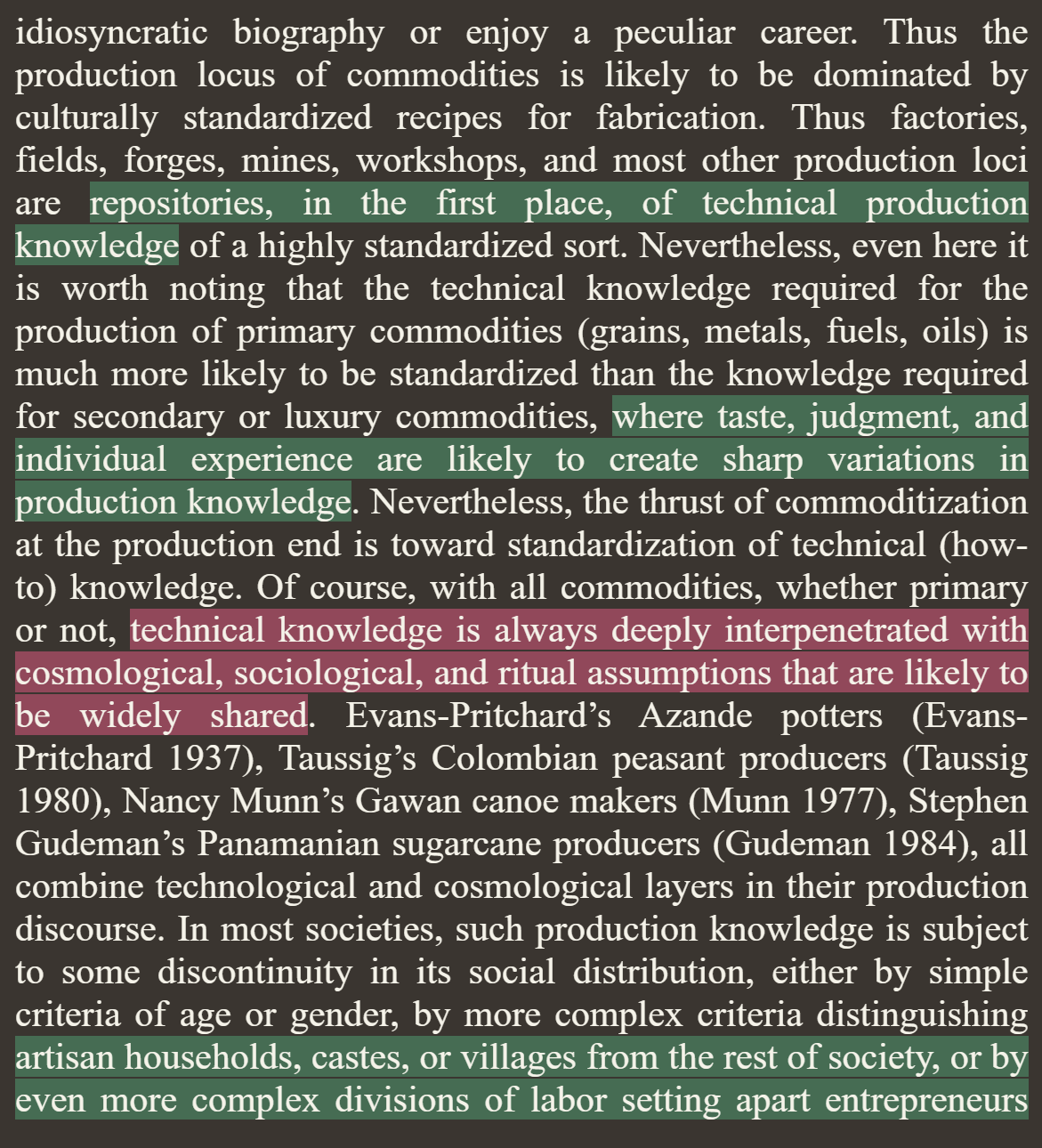
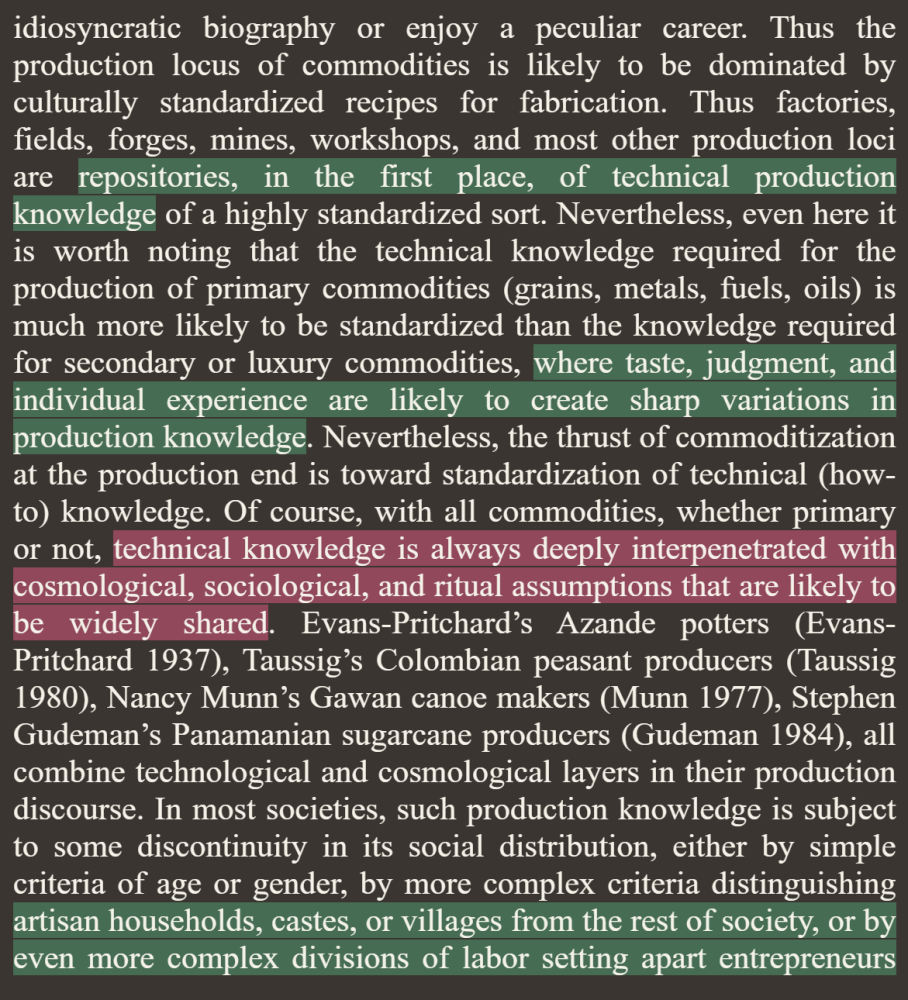
from the same: from "Introduction: commodities and the politics of value" ARJUN APPADURAI The above is really a very productive lens through which to read the commodification of Muay Thai, through two sorts of technical knowledge. Today's Muay Thai is undergoing a radical re-configuring of BOTH types of knowledge as the Thai economy of knowledges is inundated with Western and global interests. Which, actually results in the loss of knowledge. Its erasure.

-
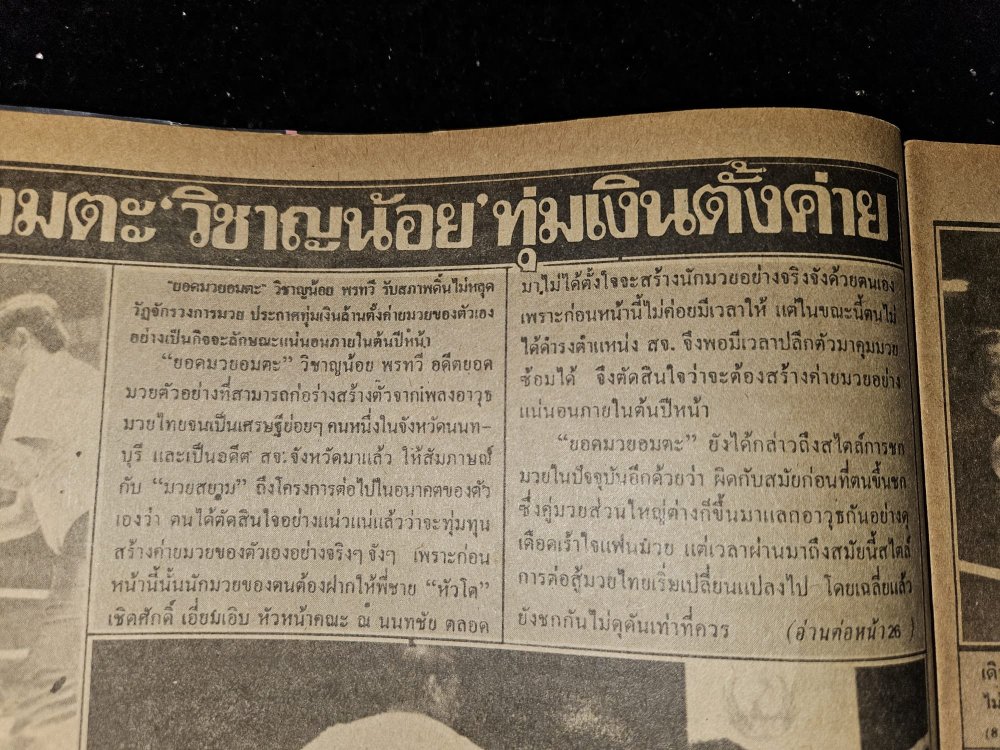
Muay Siam October 1987 We consider the Golden Age the pinnacle of Thailand's Muay Thai, and probably rightly so due to the complexity of style matchups, the depth of the talent pool, the flux of money into the sport, the rise of an educated urban fanbase, and the flourishing of lower weight classes (which had been largely opportunity-suppressed in past decades), but...the Silver Age was characterized by much tougher, more aggressive fighting styles, by reputation. Here, the GOAT to many, Wichannoi, is reported to be opening a gym because the fighters in 1987 were lacking in intensity, going backwards, in the Femeu style that today we celebrate. It important to note though that Wichannoi was one of the most forward, aggressive fighters of his time, fighting up later in his career, so there is a bit of stylistic bias here (like how Samart or Saenchai complain about Muay Khao fighters). All the same, good to note the history and shifting trends. It's also worth noting that in the 1970s there were many femeu greats, and even some Muay Khao fighters would even fight backwards, like this fight in high profile fight 1973, with Burklerk (light shorts) a World Boxing Champion to boot: Burklerk Singgit vs Chalermsak Ploenjit
-
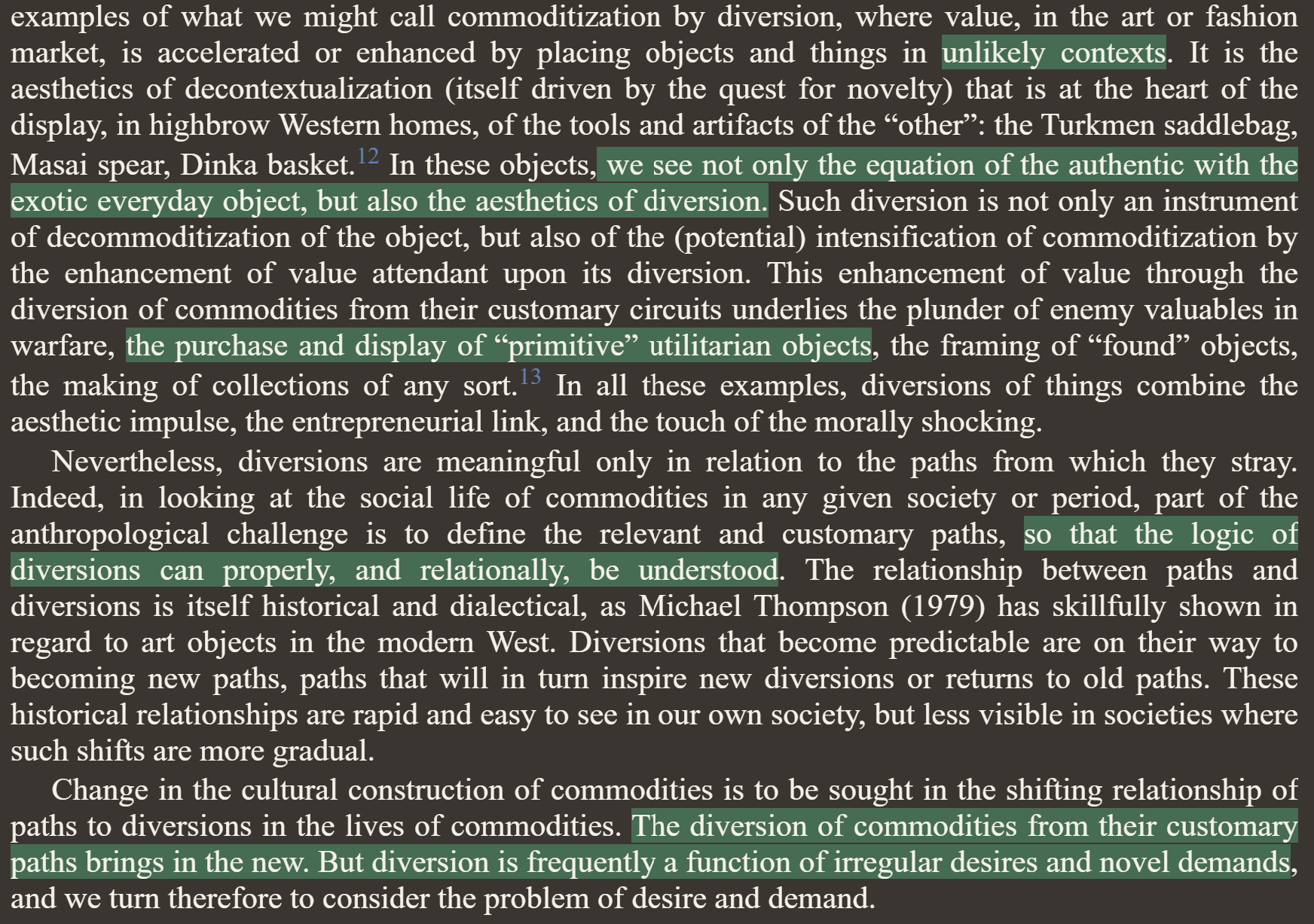
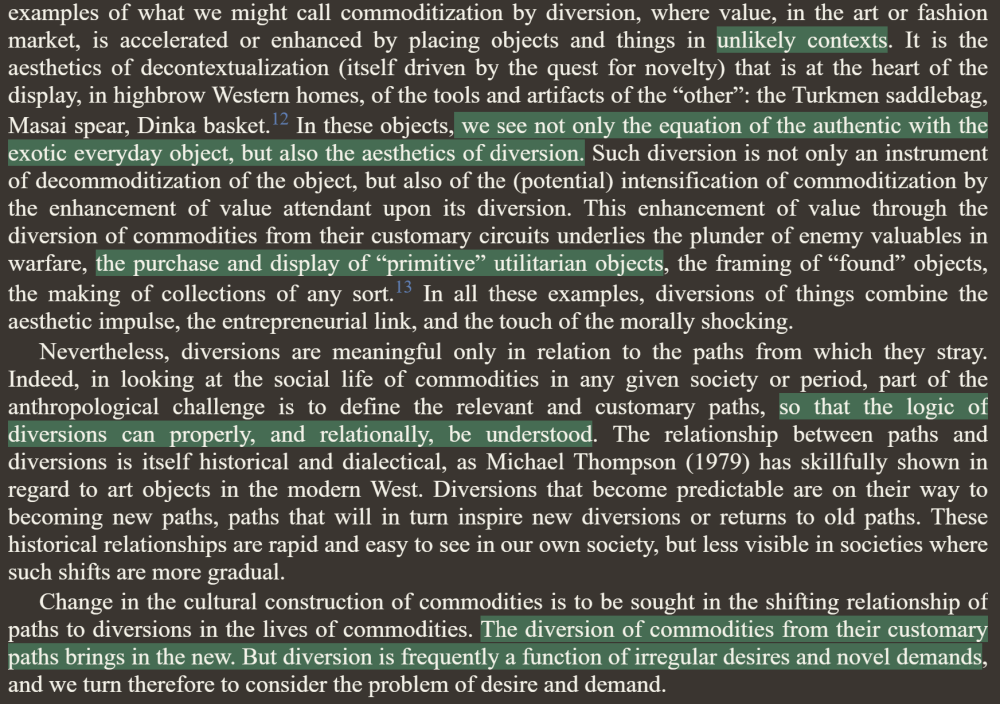
from the same: from "Introduction: commodities and the politics of value" ARJUN APPADURAI Commodities (under this approach any object of exchange is in the state of being commodity, there are no "things" that are commodities) follow customary paths, but also diversion paths, and can acquire an exotic value when diverted. This is something that traditional Muay Thai faces as itself becomes transformed by foreign interest and Capital pressures. Tracing the "customary" from the "diversion" is slippery and shifting.
-
It's truly incredible how Somrak pretty much shuts out a pretty reputable fighter in Gaonar PK in this friendly spar. Yeah, Gaonar isn't putting it on him, but this is the regular ol' your point, my point dominance game in sparring done since kids. Gaonar is definitely trying to get the point back. Somrak surreal with his off-beats and that lead leg bounce.
-
As Muay Thai changes with the tides of tourism and Soft Power, more and more experiencing a Whitening in the country itself, with European/American culture encroaching in what really are largely benign and sincere ways, I still cannot help but feel the shadow of a colonialism, of the bringing into the country the crafts and aims of a foreign culture which sees itself as "superior" to the Native soil's ways. Obvious things like strength and conditioning pictures of development, nominal "Sports Science" fit the bill of assumed superiority - and those that know Thailand know that this sense of superiority is shared by many of the Thai, there is in Thailand a certain classism which defers to the West, and a shunning of the lower classes, which in this case, hold most of the embodied knowledge of the sport and Art. The encroachment builds on these base assumptions which Thailand (Siam) have had for perhaps 150 years, since beetlenut was discouraged due to its blackening of women's teeth, and then pants and skirts were ordered by decree so as to join the European style, visually separating out the sexes.
-
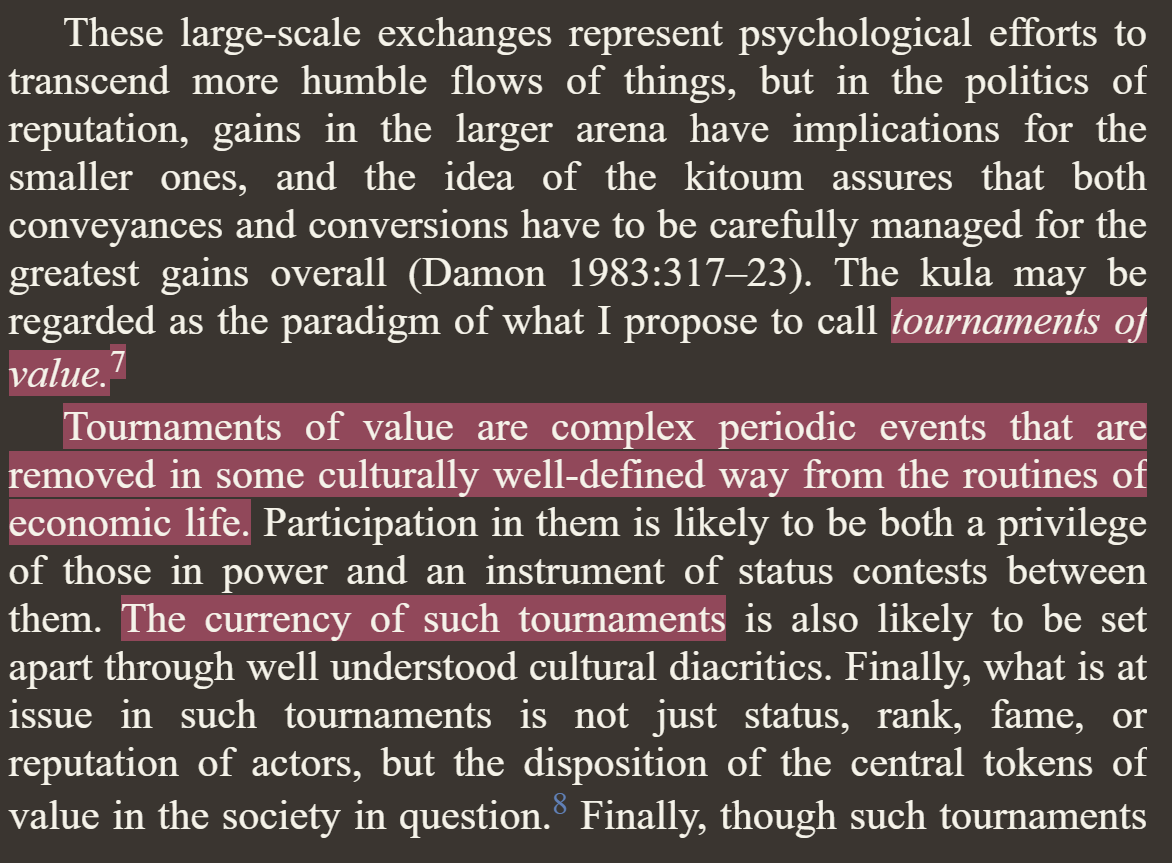
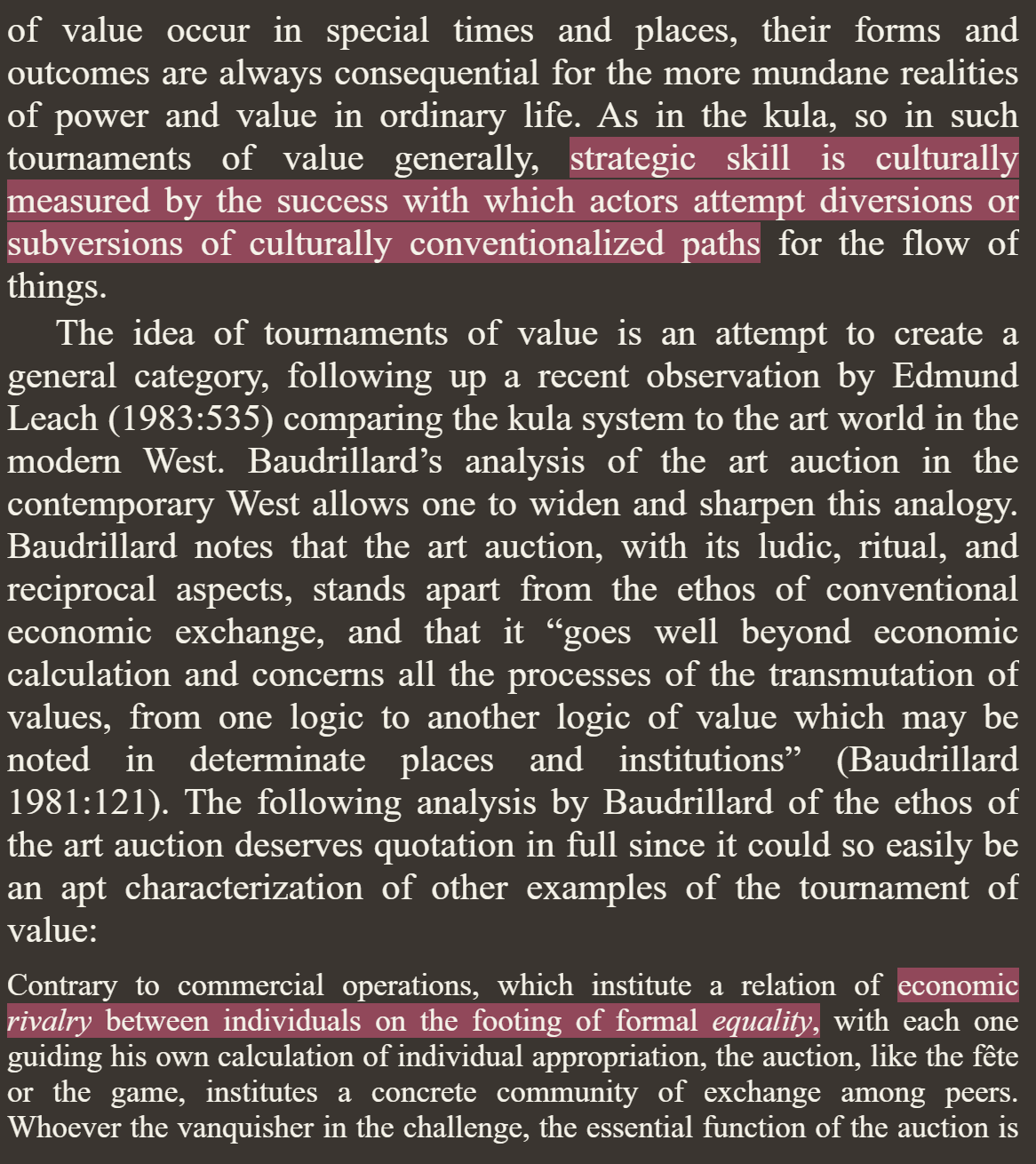
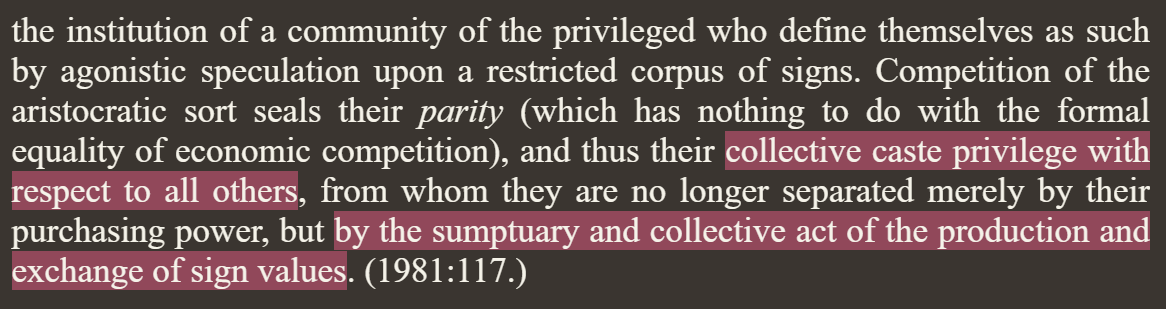
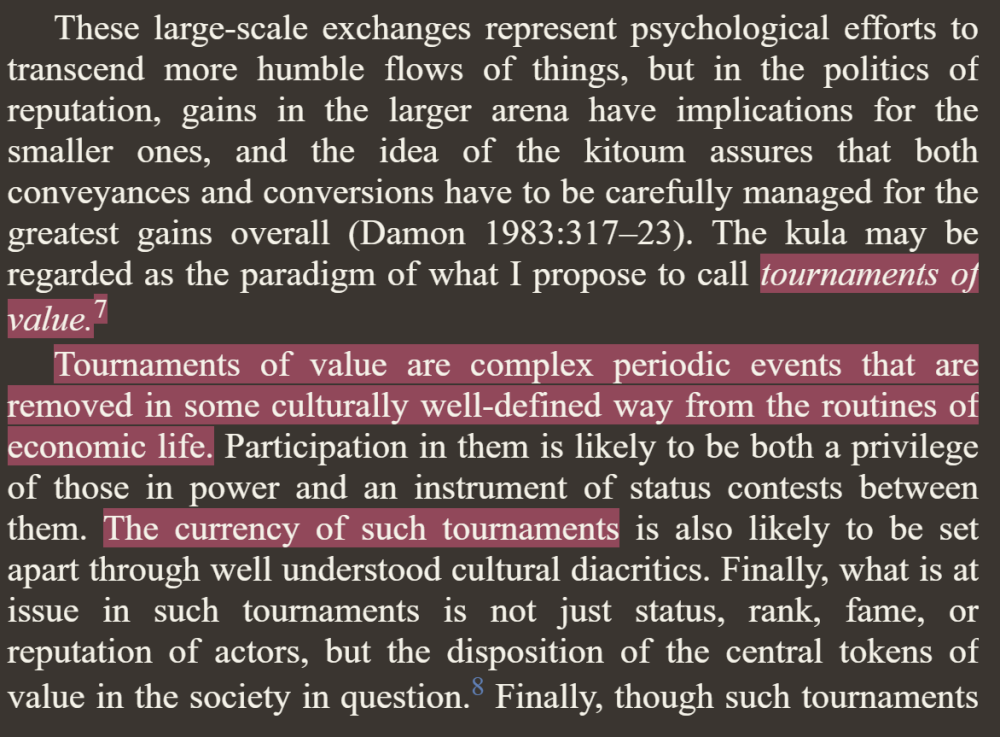
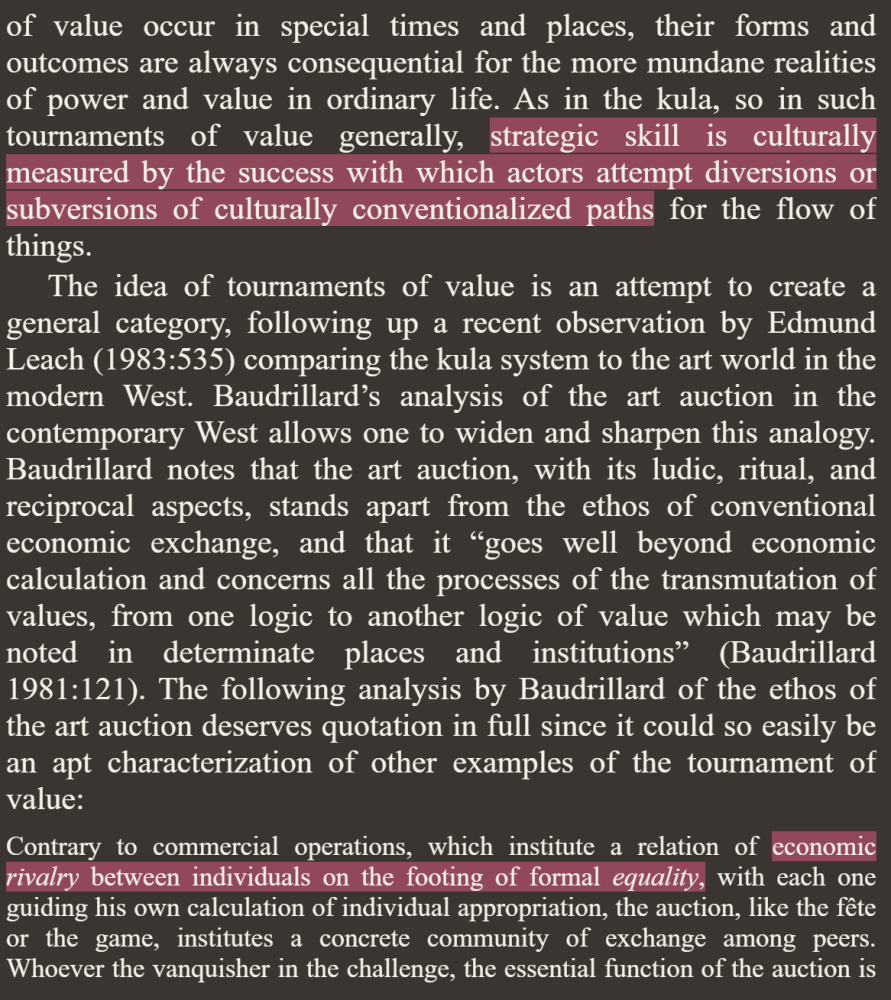
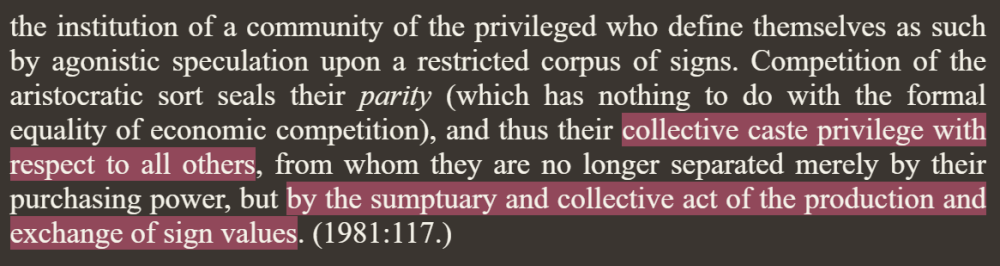
footnote: Tournaments of Value may be a helpful anthropological/ethnographic lens through which to examine agonistic gambling Muay Thai fights. These too are segregating, value competitions over displayed signs. from "Introduction: commodities and the politics of value" ARJUN APPADURAI
-
I loved watching this fight. More and more female Muay Khao fighters are finding traction in RWS. I think Winnia fought GREAT honestly. Very well rounded, great pace, love the body shot strategy. And Sanengam fought in a very difficult to solve style, a classic Thai retreat and counter to the open side, with great fading distance control, and the use of the Supergirl knee that was very elevated. She was able to solve under pressure, and use either leg counters, from a really skilled, rhythmed, pressuring fighter. This is a stylistic clash, more than even a skills clash.
-
If I could sum quickly what the deskilling of the sport comes down to, its in the imperative to "trade" in the pocket. The commodity pressures behind this imperative actively deskill the sport and its participants.
-
This has tremendous potential for analyzing the "translations' the West and commercial Tourism has made of Thailand's traditional Muay Thai, especially along the concept of "transduction" (see The Plague of Combos): Further along our understanding of Muay Thai as a language, a semiotic system - in the face of Capitalism.
-
.thumb.jpg.184ea5a61c22a139fb0d6f1fe050be22.jpg) That sounds promising if you've already moved, how are things going for you now?
That sounds promising if you've already moved, how are things going for you now? -
What is really troubling about the above is how some of the things that really made Thailand's fighters like no other in the world were specific qualities derived from Thai culture. The deft control over the fight space came out of a Thai sensibility of what power in the world actually looked like. By adopting International, globalized concept-pictures of "power" (aggression, volume, math-like-point-adding), the very Gift of Muay Thai to the world, its example, is being erased. Thais themselves will learn to fight like the lessor skilled global fighter...with perhaps long term consequence for Soft Power itself. Primary to Soft Power is the anchorage of the Thai Magic Fighter who has preternatural control over the fight space. That is why ultimately people will come to Thailand and passionately commit themselves to the art. That, ultimately, is the core "attraction" which will build international respect and honorifics. After Lumpinee already has lost the standard bearing status for the art and sport (hopefully, one day to regained), its difficult to see Rajadamnern not lean into the traditional, very Thai aspects of fighting which it has hosted for some 80 years. Sometimes you have to look longer term, than short term gain.